

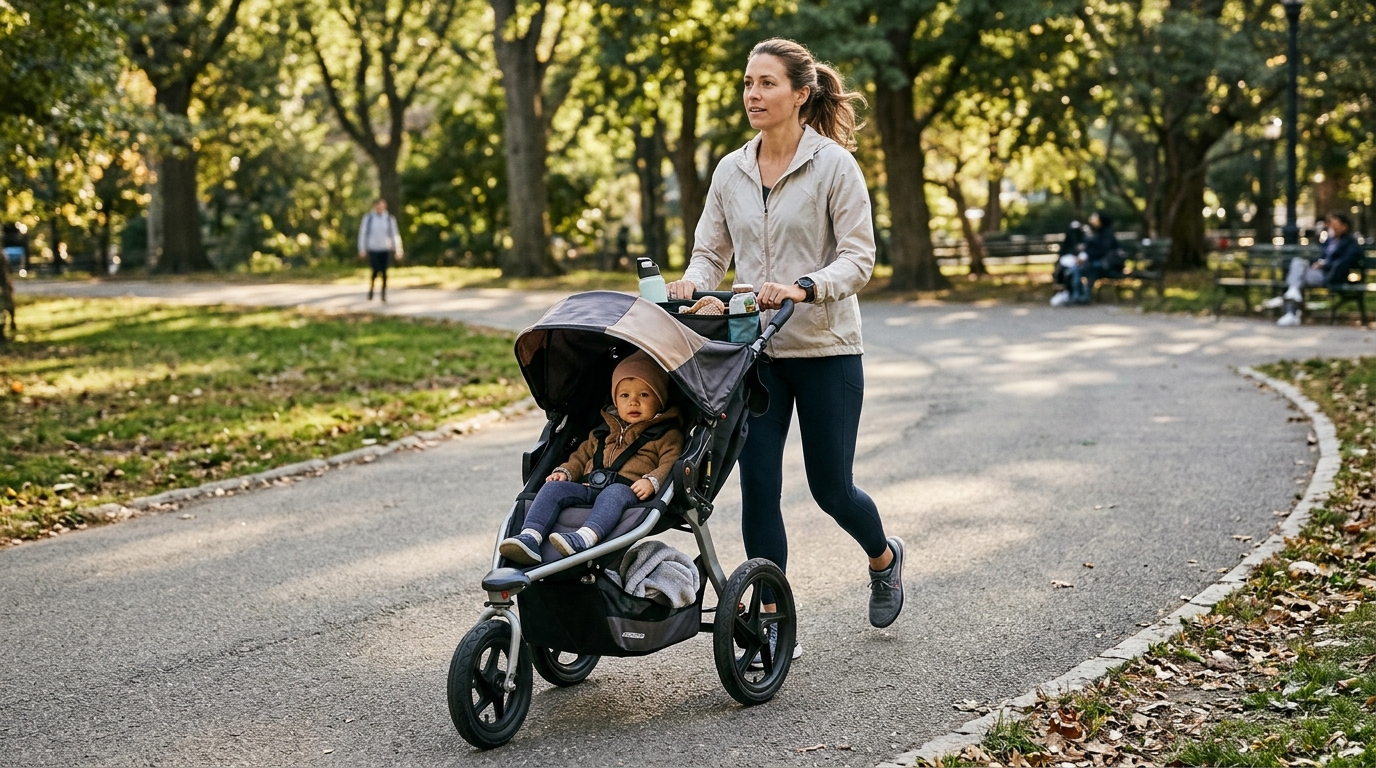
Readers researching stroller running safety need practical distinctions, reliable sources and a clear next step. The answer often depends on the circumstances, what can be verified and which professional or official instructions apply. This running tips & mom fitness guide focuses on the decision points people can actually investigate, rather than promising a universal result.
A practical health guide should help readers recognize what can be observed and what requires professional evaluation. It cannot diagnose an individual or promise a recovery date. The aim is to make symptoms, safety choices and next steps easier to discuss with a qualified clinician.
What makes running with a stroller different
Stroller running safety begins with two different readiness questions: is the child developmentally ready for the movement, and is the stroller specifically designed and approved for running? A regular lightweight travel stroller is not automatically safe for jogging. Manufacturer age and weight restrictions, pediatric guidance and the child’s medical needs matter more than a fixed age repeated on social media. Health advice depends on symptoms, personal history, examination findings, and professional assessment. A general guide cannot diagnose a condition or replace care. New or rapidly worsening symptoms, significant pain, or sudden functional changes deserve prompt medical attention rather than an extended self-treatment experiment. For further context, review Run Fast Mommy recovery guide.
Running with a stroller changes posture, steering, turning radius and braking. The effort may feel higher at a familiar pace, especially uphill or into the wind. Many runners benefit from slowing down and treating the first outings as practice rather than a workout test. Comfortable running mechanics and a relaxed grip are more useful than chasing a normal solo pace. One measurement or a single good day can be misleading. Clinicians often look for patterns across time and consider medications, previous injuries, workload, and other health conditions. Write down relevant changes in ordinary language so the visit focuses on the problem rather than a perfect self-diagnosis.
Confirm child and stroller readiness
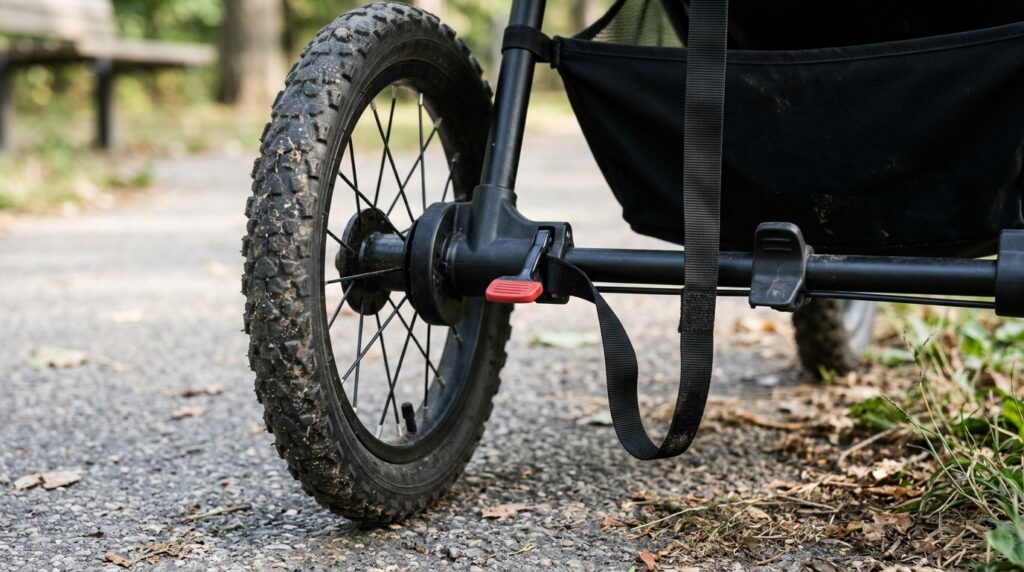
The American Academy of Pediatrics recommends stroller features such as a wide stable base, usable brakes and a secure five-point harness. A jogging stroller adds manufacturer-specific components that may include suitable wheels, suspension and instructions for front-wheel settings. Inspect the product manual and any recall information rather than assuming all three-wheeled strollers serve the same purpose. If a recommended exercise or routine increases symptoms substantially, stop and ask a qualified clinician how to modify it. Progress is seldom perfectly linear. A safe plan should specify both what to attempt and which symptoms mean the plan needs reassessment.
A travel stroller is not automatically a jogging stroller
Ask a pediatrician about your child’s readiness, especially after prematurity, medical concerns or unusual developmental needs. Some manufacturers have separate guidance for walking, running and infant car-seat adapters. The permission to attach a car seat for walking does not automatically authorize running with that arrangement. Follow the most protective applicable instruction. Commercial devices and viral techniques can promise certainty that research has not established. Read the intended use, limitations, and professional guidance before treating a product as a substitute for evaluation. A newer tool is not automatically better for every person.
Age and development guidance is individualized
Choose an even, familiar route away from heavy traffic, steep cross slopes and crowded intersections. Wide paths allow room for turning without forcing a stroller onto the road. Avoid rough gravel, potholes and crowded trails until you have practiced handling the stroller comfortably. A shorter loop near home is easier to interrupt if the child becomes uncomfortable. The practical goal is understanding, not fear. Identify what can be observed safely at home, which questions belong at an appointment, and what records will help with follow-up. Education is most useful when it makes appropriate care easier to access.
If a parent is returning to exercise after pregnancy, the adult’s own health and pelvic-floor symptoms also deserve attention. A child-ready stroller does not mean every runner is physically ready for pushing it. Persistent pain, leaking or pelvic heaviness should be discussed with a qualified clinician.
Understand steering and braking changes
Before every outing, check tires, wheel attachment, brakes, harness straps and storage load. Heavy bags hanging on the handle can change stability; use the appropriate low storage basket within its rating. Secure loose items and avoid scarves or toys that could enter wheels. The safety tether should be used according to the stroller maker’s directions. Risk factors describe probabilities across groups, not destinies for individuals. An athlete or patient may improve with a simple adjustment, require longer rehabilitation, or need another assessment. Avoid comparing your timeline with a social-media success story.
Practice on a quiet paved path before entering a busier park. Try turns, stopping and short slopes at walking speed. The stroller’s size affects passing distance, so yield generously and avoid using a crowded sidewalk as a speed workout.
Build a stroller-running routine around safety
Weather requires a different calculation when a child is sitting still. A runner may feel warm while the child is cold, or the runner may tolerate sun better than a young passenger. Check temperature, shade, wind and air quality. Make planned stops to observe comfort, hydration needs and any sign of distress rather than interpreting silence as proof all is well. A good professional discussion includes the expected benefits, burdens, cost, and alternatives of each option. Ask how success will be measured and what the plan is if symptoms persist. Shared decisions are more realistic than assuming one approach fits everyone.
Choose a route that works for two people
A realistic training plan might begin with an easy walk, then short jog intervals on smooth paths after readiness is confirmed. Keep total duration conservative, notice whether pushing changes your shoulders or back, and add faster efforts only when control remains steady. A stroller run should complement, not automatically replace, all other training. Keep instructions and questions together: current symptoms, activities that provoke them, prior tests, relevant medications, and the next planned review. Do not start, stop, or change a prescription based on an article. Clarify uncertainties with your treating professional.
Check harness, tires, brakes and load limits
Consider a mom accustomed to a five-mile solo loop with several road crossings. The better stroller route may be two shorter laps in a quieter park. This is not a training failure; it is route design for a different task. Planning around the passenger, visibility and maneuvering improves the experience for both people. There is value in steady, proportionate action. Protect the basics of recovery, notice meaningful changes, and obtain individualized guidance when warning signs appear. The purpose of this guide is to help you ask better questions, not to make a diagnosis.
Plan shorter loops and weather protection
A small repair kit and a way to contact help can be useful, but keep the load within the stroller’s limits. Plan one easy exit point per loop. The best route leaves room for a child to need a break and for the parent to change plans without stress.
Stroller runs can be part of family life without needing to become every run. A parent may prefer alternating solo sessions, easy stroller walks and an occasional jog. That flexibility protects training quality and avoids making the child responsible for the adult’s performance goals. Rest and connection count as successful outings too.
Questions for your appointment: What findings support the working diagnosis? Which symptoms should prompt urgent contact? How will improvement be measured? Which activities or medicines need professional supervision? A written answer to each question can make follow-up care easier to understand and safer to carry out.
For authoritative context, consult American Academy of Pediatrics safe strollers. Its scope and limitations should be considered alongside the specific facts; the link is not a substitute for professional or local instructions.
The useful next step is a proportionate plan: document what you notice, follow credible professional instructions, and arrange reassessment if symptoms worsen or progress stalls. Education should improve questions and decisions, not substitute for an examination. Seek urgent help when serious warning signs occur.