


Rucking for running moms is one of the most practical fitness ideas gaining attention in 2026. It is simple: you walk while carrying weight in a backpack or weighted vest. That may sound basic, but for busy moms who already run, parent, work, clean, carry kids, manage meals, and squeeze workouts into small windows, rucking can be a smart way to build strength and endurance without adding more pounding miles.
Many running moms reach a point where they want to get stronger, but they do not always have the time or energy for another complicated workout. More running can help endurance, but it can also increase fatigue if your body is already stressed. More gym time sounds helpful, but it may not fit your schedule. Rucking sits in the middle. It gives your walking time more purpose, challenges your muscles, supports posture, and still feels more manageable than a hard run.
The best part is that rucking does not require perfection. You do not need fancy equipment to begin. You do not need to be fast. You do not need to turn it into a military-style workout. For moms, the goal is not to suffer. The goal is to use a simple, low-pressure tool that helps your running body become stronger, steadier, and more durable.
Why Rucking for Running Moms Is Trending in 2026
Rucking for running moms fits the current shift toward smarter, more sustainable fitness. Many runners are moving away from the idea that every workout must be intense to count. Instead, they are looking for training that supports long-term consistency, strength, recovery, and real life. This is especially important for moms, because motherhood already adds physical and mental stress before the workout even begins.
Rucking works because it turns ordinary walking into loaded movement. Your legs, glutes, calves, core, back, and shoulders all contribute more than they would during a regular walk. At the same time, it is usually easier on the body than another run, especially when you keep the weight light and the pace controlled. That makes it useful for moms who want extra fitness benefits without beating up their joints or draining their nervous system.
This topic also connects naturally with your existing guide on Zone 2 running for moms. Both approaches teach the same lesson: not every effective workout has to feel brutal. Some of the best fitness gains come from repeatable efforts done consistently.
It gives moms strength without adding another hard run
Running is excellent for cardiovascular fitness, stress relief, and confidence. But running alone does not always build the kind of full-body strength moms need. A stronger body helps you hold better form when tired, climb hills with more control, carry groceries without strain, chase kids at the park, and recover from long days with less soreness.
Rucking adds resistance to a movement most moms can already do: walking. That is why it can feel less intimidating than starting a new gym plan. You can ruck around the neighborhood, at a park, on a school-drop-off walk, or during a weekend family outing. The movement is familiar, but the added load asks your body to work harder.
For running moms, this matters because stronger supporting muscles can help reduce the feeling that every run is a fight. When your hips, glutes, calves, core, and postural muscles are better conditioned, your body has more support. You may still need strength training, mobility, and rest, but rucking can become a useful bridge between walking, running, and strength work.
Rucking vs running: what changes in the body
Running is higher impact because both feet leave the ground with every stride. That impact is not automatically bad. In fact, many runners adapt well to it when training is gradual. However, too much impact without enough strength and recovery can lead to sore knees, cranky hips, shin discomfort, or fatigue that lingers.
Rucking keeps one foot on the ground most of the time, which usually makes it feel more controlled. The added weight increases the effort, but the walking pattern keeps the workout steady. Your heart rate may rise, your breathing may deepen, and your muscles may work harder, but the workout can still feel calmer than a run. That is why it can be useful on days when you want to train but do not want another hard session.
Why it fits the busy-mom schedule
Rucking works well for moms because it can blend into normal life. You can ruck while pushing a stroller, walking around the neighborhood, taking a lunch-break walk, or getting outside before the kids wake up. You do not need to drive to a gym, reserve a machine, or follow a complicated routine.
The time flexibility matters. A 20-minute ruck can still feel productive. A 30-minute ruck can become a solid endurance session. A longer weekend ruck can replace an easy cross-training day. The workout can be scaled depending on your sleep, stress, schedule, and current fitness level. That flexibility is exactly what many moms need.
How to start rucking without overthinking it

The biggest mistake beginners make is starting too heavy. More weight is not automatically better. For running moms, the first goal is learning how your body responds. Start light enough that you can walk with good posture, breathe steadily, and finish feeling like you could do it again in a day or two.
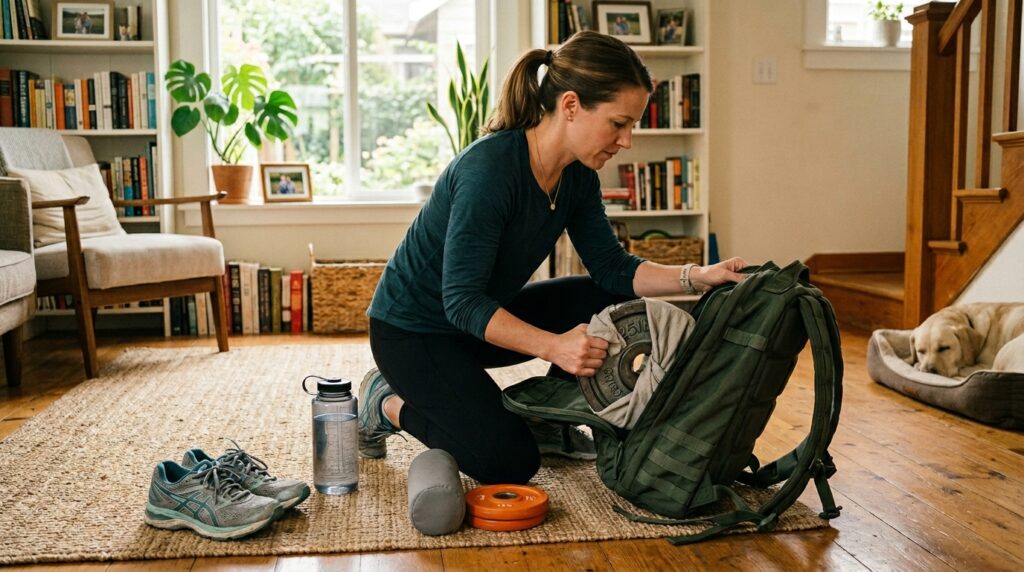
A simple backpack can work at first. Add soft, stable weight like water bottles, books wrapped in a towel, or a small sandbag. Keep the weight secure so it does not bounce or pull awkwardly. If you decide to continue long term, a comfortable rucking pack or weighted vest may be worth considering, but you do not need expensive gear on day one.
Keep the first session short. Try 15 to 20 minutes at a comfortable pace on a flat route. Pay attention to your shoulders, lower back, knees, feet, and breathing. If anything feels sharp, unstable, or painful, stop and adjust. Mild muscular effort is normal. Joint pain is not something to push through.
Choose the right load, route, and pace
For beginners, light is smart. Many moms do well starting with a very small load, then adding gradually only if the body feels good. You should be able to stand tall, keep your ribs stacked over your hips, and walk without leaning forward or arching your back. If your posture changes quickly, the weight is probably too much.
Choose a flat, familiar route at first. Hills, uneven trails, stairs, and long distances can come later. Your pace should feel purposeful but controlled. You are not trying to race your ruck. You are trying to build strength and endurance in a way your body can repeat. Think strong walk, steady breathing, and good form.
A Simple Rucking Plan for Running Moms
A good rucking plan should support your running, not compete with it. If you already run two or three days per week, rucking can fit on an easy day, a walking day, or a cross-training day. If you are returning from a break, postpartum season, or injury, you may use rucking carefully as part of rebuilding general fitness, but it should not replace medical or pelvic floor guidance when needed.
Here is a simple beginner-friendly structure:
Week 1: One ruck for 15 to 20 minutes on a flat route with light weight.
Week 2: One or two rucks for 20 minutes, still keeping the load light.
Week 3: Two rucks for 20 to 25 minutes, or one longer 30-minute ruck if recovery feels good.
Week 4: Keep two weekly rucks and decide whether to add a little time or a little weight, not both at once.
This gradual approach matters because your muscles, joints, feet, and connective tissue need time to adapt. Just because rucking feels easier than running does not mean it has no training stress. Loaded walking still counts. Respect it, and it can help you build consistency.
How to pair rucking with running, strength, and recovery
Rucking should be placed carefully in your week. If you do a hard running workout, such as intervals, hills, or a tempo run, avoid heavy rucking the same day or the day before. Your legs need room to recover. If you are doing an easy running week, rucking can add variety without needing another run.
A balanced week might look like this: Monday rest or gentle mobility, Tuesday easy run, Wednesday short ruck, Thursday strength training, Friday rest, Saturday longer easy run, Sunday family walk or light ruck. This gives you running, strength, walking, and recovery without stacking too much intensity together.
Your existing post on strength training for running moms pairs well with this topic because rucking is not a complete replacement for strength work. Squats, lunges, hip hinges, calf raises, rows, and core exercises still matter. Rucking simply adds another practical tool.
Safety signs moms should not ignore
Stop or reduce the load if you feel sharp knee pain, hip pain, foot pain, numbness, dizziness, unusual pelvic pressure, leaking that worsens, or lower back pain that changes your walking form. These signs do not mean you can never ruck. They mean your current setup, weight, distance, posture, or recovery may need adjustment.
Heat also matters. A weighted pack can make your body work harder and feel hotter. Choose cooler times of day, bring water, and do not chase intensity in hot weather. Moms often push through discomfort because they are used to being needed, but fitness should build you up, not quietly break you down.
For more safety guidance, Cleveland Clinic has a helpful overview of rucking and how to approach it responsibly. You can read it here: Cleveland Clinic rucking guide.
Recovery is also part of the plan. If your legs feel heavy after rucking, keep the next run easy or take a rest day. If your sleep has been poor, choose a lighter pack or a shorter route. If your body feels unusually sore, do not add weight yet. Your guide on running recovery for moms in 2026 is a strong internal link here because rucking only works when the body has enough time to adapt.
Rucking for running moms is not about proving toughness. It is about building useful strength in a way that fits real life. It can turn a simple walk into a training session, help you feel stronger on hills, support better posture, and give you another option on days when running feels like too much.
Start light. Keep it simple. Walk tall. Let your body adapt. When used wisely, rucking can help running moms build endurance, strength, and confidence without adding more stress to an already full life.