

Running can feel like one of the few things that still belongs to you. It clears your head, builds confidence, and gives you a small piece of control in a life that often feels packed with school schedules, work demands, laundry, mental load, and constant interruptions. That is exactly why pelvic floor symptoms can feel so frustrating. They do not just affect your body. They can also mess with your confidence and make every run feel more uncertain than it should.
For a lot of moms, the first sign is easy to brush off. Maybe you notice a little leaking during strides, hill repeats, or a hard sneeze after a run. Maybe you feel pressure, heaviness, or a strange sense that your core is not supporting you the same way it used to. Some moms feel discomfort in the hips, low back, or deep core and assume they only need more stretching. Others keep running through it and hope the issue will settle down on its own.
Sometimes it does improve with smarter training. Sometimes it does not. That is why pelvic floor health has become a bigger running conversation in 2026. More women are realizing these symptoms are common, but common does not mean normal enough to ignore forever. The goal is not to panic every time something feels off. The goal is to understand what your body may be asking for and respond early instead of waiting until running feels harder, less fun, and less sustainable.
This topic fits naturally with what Run Fast Mommy already covers. If you have read Running Recovery for Moms in 2026, Strength Training for Running Moms in 2026, or Postpartum Running Readiness 2026, this post is the next logical step. It connects recovery, strength, and return-to-impact decisions with one body system that running moms often overlook until symptoms start speaking loudly.
It is not only a postpartum issue

Many moms hear the words “pelvic floor” and immediately think postpartum. That season matters, of course, but pelvic floor symptoms do not belong only to women who recently had a baby. Running moms can notice issues years after birth, during heavier training blocks, in perimenopause, after a long stretch of poor sleep, or during seasons when overall stress stays high. Your pelvic floor does not exist in isolation. It works with your breathing, core pressure, posture, hips, and how your body handles impact.
That is why this topic deserves more attention than it used to get. Plenty of moms are strong, active, and motivated, yet still deal with symptoms they quietly manage instead of properly addressing. Wear dark leggings just in case. Scout bathroom stops before the run. Avoid sprints, jumping, or downhill work. Over time, they start changing their training around the symptom rather than improving the reason behind it.
Common signs moms often ignore
Pelvic floor issues do not always show up in obvious ways. Leaking during a run is the symptom most people recognize, but it is not the only one. Some moms notice heaviness or dragging in the pelvis after a harder session. Others feel pressure during longer runs, discomfort with impact, or a weak disconnected feeling in the lower core. You might also notice that your hips or low back feel off even when your mileage is not that high.
These symptoms can look random at first. In reality, they often show up when load is outpacing support. That might mean your body needs more strength, better breathing mechanics, a slower progression back to impact, or more recovery between demanding sessions. Sometimes the issue is not that you cannot run. It is that the way you are loading your body right now is not matching what your system can handle comfortably.
Why pushing through can keep you stuck
Driven moms are especially good at adapting. That strength helps in motherhood, but it can backfire in running. If something feels off, many moms do what they always do: push through, minimize it, and keep moving. The problem is that compensation can become a habit. When you keep forcing intensity through a body that already feels overloaded, you often reinforce the exact pattern that is not working.
This is where recovery matters more than many runners expect. If you are sleeping poorly, under-fueling, carrying high life stress, or stacking too many hard sessions together, your body has less room to manage impact well. That is one reason this topic pairs so well with Running Recovery for Moms in 2026. Pelvic floor symptoms do not always mean you need to stop running. Sometimes they mean you need to stop training as if stress only counts when it comes from workouts.
Why more running moms are hearing about it in 2026
The conversation is getting louder because more women are finally talking about symptoms they used to hide. There is also growing attention on how pelvic floor function affects athletes, active women, and postpartum runners, not just women in a clinical setting. That shift matters because once a topic becomes discussable, moms are more likely to seek help before the issue starts shaping every decision they make around exercise.
Another reason is practical. Moms want a return-to-running conversation that feels realistic. They do not just want to hear “listen to your body” and then figure everything out alone. They want guidance that respects childcare, time pressure, body changes, fear of symptoms, and the mental side of getting back to impact. That is why your existing post on Postpartum Running Tips for Moms remains such a strong supporting article here. Moms are not only asking when they can run again. They are asking how to do it without feeling like their body is working against them.
How to Support Your Pelvic Floor and Keep Running More Confidently
Build a calmer return to impact
The smartest next step is not fear. It is a calmer, more honest approach to load. If symptoms are mild, inconsistent, or just starting, you may do well by stepping back and looking at the full picture. Are you adding speed too fast? Have you been doing hard workouts on top of poor sleep and a chaotic week? Are you running through fatigue without enough strength work or enough recovery? Those questions matter because the answer is often bigger than one muscle group.
For many moms, the best progress comes from reducing the pressure to prove fitness right away. You may need shorter runs, fewer hard sessions, or a temporary run-walk structure. You may need to shift attention toward breathing, trunk control, hip strength, and gradual loading rather than focusing only on pace. That does not mean you are starting over. It means you are creating a stronger base for the kind of running you want to keep doing long term.
Start with load, breath, and strength
A good place to begin is with the basics you can actually repeat. Make sure your training week has enough easy running. Add strength work that supports hips, glutes, calves, and trunk control. Pay attention to how you brace and breathe during effort, especially when lifting, climbing, or pushing pace. A lot of moms hold tension, grip through the midsection, or push pressure downward without realizing it. Small changes in breathing and effort can matter more than one more “core challenge” from social media.
If strength has been inconsistent, go back to simple, repeatable work. Your post on Strength Training for Running Moms in 2026 fits here perfectly. Stronger hips, better single-leg control, and smarter progression often support better running form and a calmer overall system. Wearable data can help too, but only when you use it to spot patterns rather than stress yourself out. That is where How Running Moms Can Use Wearable Tech Smarter in 2026 becomes useful.
Know when it is time to get checked
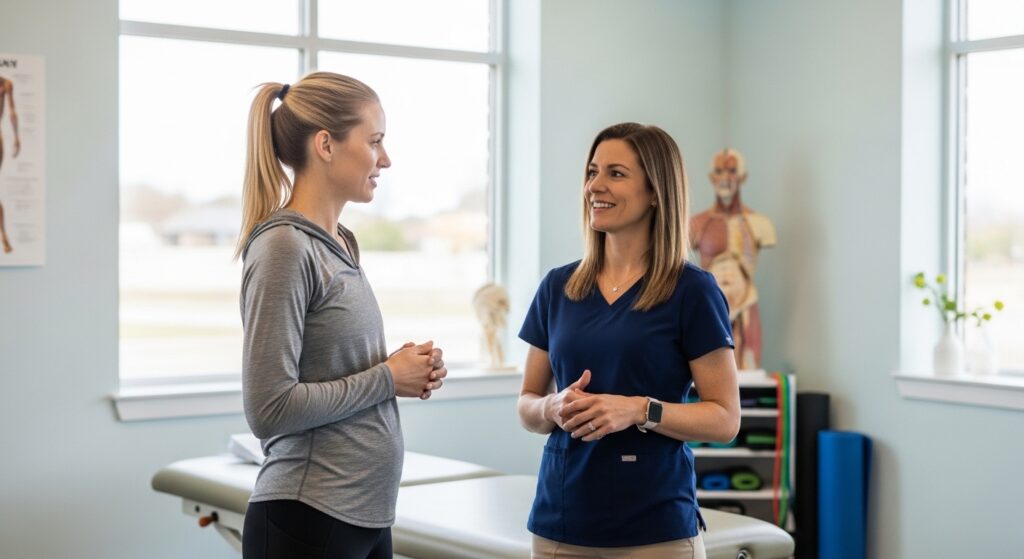
Some symptoms deserve more than home adjustments. If leaking is persistent, pressure or heaviness keeps returning, pain is involved, or running feels mentally stressful because you are always managing symptoms, it is worth getting assessed by a qualified pelvic floor physical therapist or a women’s health clinician. That is not a sign you failed at recovery. It is the smart version of not guessing.
The biggest win is clarity. A good assessment can help you understand whether you need more coordination, more strength, a slower loading plan, better pressure management, or a broader postpartum recovery approach. That kind of guidance can save months of second-guessing. It can also make running feel more normal again, which matters a lot for moms who rely on movement for energy, identity, and stress relief.
If your season of life still feels overloaded, connect this topic with How to Balance Motherhood and Running Without Burning Out. The body does not separate running stress from life stress as neatly as many people wish. The more honest you are about the whole load, the better your training choices usually become.
The bottom line is simple. Pelvic floor symptoms are not something to be ashamed of, and they are not something you need to quietly build your whole training life around. They are information. That information says slow down for a bit. Sometimes it says strengthen, breathe better, or progress more gradually. It says get expert help. The earlier you listen, the easier it becomes to keep running in a way that feels strong, steady, and sustainable.
For evidence-based reading, you can link to ACOG’s exercise-after-pregnancy guidance, ACOG’s urinary incontinence explainer, and the 2026 Frontiers overview of pelvic floor considerations in sport and physical activity.