

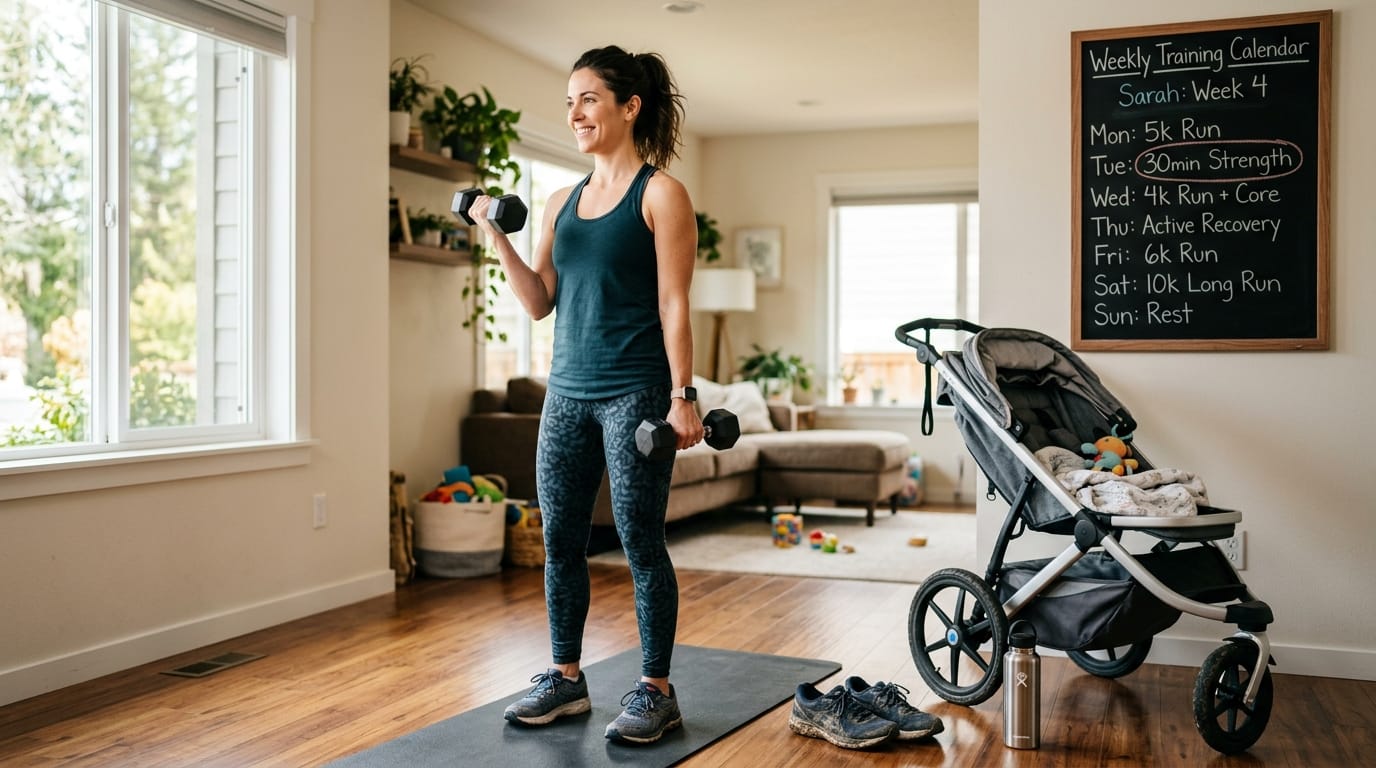
Hybrid training for running moms 2026 is becoming popular because many moms want more than mileage. They want to run stronger, feel better, build muscle, protect their joints, and still have energy for family life. The old idea was simple: runners run. However, more moms now realize that running alone does not always build the strength, balance, mobility, and resilience needed for real life.
Hybrid training combines endurance and strength. For a running mom, that may mean easy runs, short strength workouts, mobility, walking, recovery days, and the occasional faster session. The goal is not to train like a professional athlete. Instead, the goal is to create a balanced routine that supports your body, your schedule, and your long-term health.
This approach can work well for moms because time is limited. You may not have an hour every day. You may only have twenty minutes before school drop-off, during nap time, or after dinner. Hybrid training helps you use those short windows better. A short strength session can support your next run. An easy run can build endurance without draining your whole day. A recovery day can help you come back stronger.
This guide explains how hybrid training for running moms 2026 can fit into real mom life. You will learn how to combine running, strength, mobility, and rest without turning fitness into another source of pressure.
Why Hybrid Training for Running Moms 2026 Makes Sense
Running builds cardiovascular fitness, discipline, confidence, and mental relief. Still, running repeats the same movement pattern again and again. Over time, weak hips, tired glutes, tight calves, poor core control, or skipped recovery can lead to pain. That is where hybrid training helps.
Strength training supports the muscles that running depends on. Mobility work helps your body move with less stiffness. Walking adds low-stress movement. Recovery gives your tissues time to adapt. Together, these pieces create a more complete fitness routine.
This topic connects naturally with Run Fast Mommy’s article on Zone 2 running for moms. Easy aerobic work gives moms a strong base without making every run feel exhausting. It also pairs well with strength training for running moms, because strength is one of the main pillars of hybrid training.
Hybrid Training Is Not About Doing More Every Day
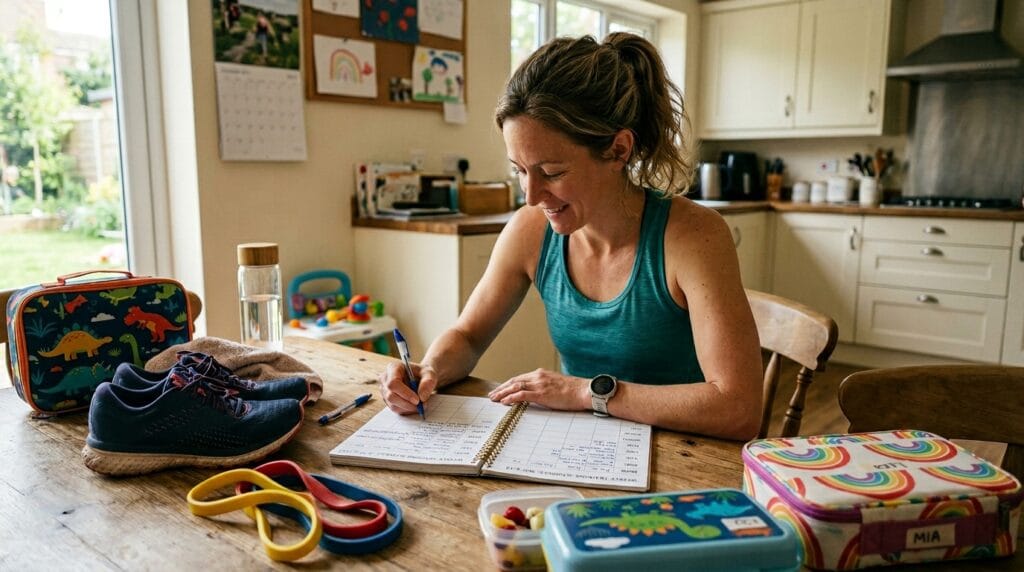
Many moms hear “hybrid training” and imagine a packed schedule with running, lifting, stretching, and tracking every detail. That version will not last for most families. A better plan starts smaller.
Hybrid training does not mean doing everything at once. It means choosing the right type of movement for the right day. Some days should focus on running. Other days should build strength. Some days should stay easy. A few days should feel like recovery, not punishment.
For busy moms, the biggest win is balance. If you only run hard, your body may feel worn down. If you only lift weights, your endurance may fade. If you skip recovery, both running and strength can suffer. Hybrid training gives each part of fitness a place without letting one part take over.
Running Builds Endurance, but Strength Builds Support
Running trains your heart, lungs, legs, and mind. However, strength training helps your body handle the impact of running. Strong glutes, hips, hamstrings, calves, and core muscles can support better form and reduce unnecessary strain.
You do not need a full gym to get benefits. Bodyweight squats, step-ups, glute bridges, lunges, dead bugs, calf raises, and resistance band work can support running. Start simple. Then add more challenge only when the basics feel controlled.
Recovery Is Part of the Training Plan
Recovery is not laziness. It is where adaptation happens. Moms often forget this because daily life already demands so much. You may finish a run, then carry groceries, clean the house, answer work messages, and manage bedtime. Your body counts all of that as stress.
A hybrid routine should include true easy days. Walking, stretching, mobility, or rest can all support progress. If you feel heavy, sore, irritable, or unusually tired, choose the easier option. Consistency matters more than forcing one perfect workout.
How to Build a Weekly Hybrid Training Routine
A good weekly plan should match your current fitness level. If you are new to running, returning after pregnancy, or restarting after a long break, keep the plan gentle. If you already run several days per week, you can add strength without increasing total stress too quickly.
A simple starting point is three running days, two strength days, and two lighter recovery days. That does not mean seven hard workouts. It means your week has structure. For example, Monday can be strength, Tuesday can be an easy run, Wednesday can be mobility or walking, Thursday can be strength, Friday can be rest, Saturday can be a longer easy run, and Sunday can be a short recovery walk.
This kind of plan also works well with morning running routines for moms. When you know the purpose of each day, you waste less time deciding what to do. You can prepare shoes, clothes, water, and a short workout plan the night before.
A Simple 3-2-2 Weekly Formula for Moms
The 3-2-2 formula is easy to remember. Do three running sessions, two strength sessions, and two recovery-focused days. Your running days can include one easy run, one short interval or hill session, and one longer easy run. Your strength days can last only twenty minutes.
Recovery days should not feel useless. A walk, gentle mobility, light yoga, or full rest can help your body absorb training. If your week gets chaotic, keep the easy run and one strength workout. Then rebuild from there. Missing a session does not ruin the plan.
How Moms Can Avoid Burnout with Hybrid Training
Hybrid training can help moms avoid burnout, but only if the plan stays realistic. The danger comes when you try to run more, lift more, track more, and recover less. That turns a smart routine into another impossible standard.
Start by choosing your minimum effective plan. Ask yourself what you can repeat on a normal week, not a perfect week. Maybe that means two runs, two strength sessions, and one walk. Maybe it means three short workouts total. The best plan is the one you can actually continue.
Also pay attention to your season of motherhood. A mom with a newborn has different recovery needs than a mom with teenagers. A mom working night shifts has different energy than a mom with a flexible schedule. Your routine should respect your real life.
If you are postpartum, pregnant, recovering from injury, or managing pelvic floor symptoms, talk with a qualified healthcare provider before increasing training. Run Fast Mommy’s postpartum running tips for moms can help you think through a safer return.
Signs Your Hybrid Plan Is Too Much
Your body usually sends warnings before burnout hits. Watch for constant soreness, poor sleep, low motivation, heavy legs, frequent irritability, rising resting heart rate, nagging pain, or a feeling that every workout is harder than it should be. These signs do not mean you are weak. They mean your plan needs adjusting.
When that happens, reduce intensity first. Keep movement easy for a few days. Swap a run for a walk. Shorten strength workouts. Add sleep when possible. Eat enough food, especially protein and carbohydrates, because running moms need fuel.
Hybrid training for running moms 2026 should make you feel stronger over time, not constantly behind. Your plan should support your life, not compete with it. For a trusted outside reference, you can review the World Health Organization’s physical activity guidance here: WHO physical activity recommendations.
Progress Should Feel Sustainable, Not Desperate

Sustainable progress often looks boring. You repeat easy runs. You lift the same basic movements. You rest before pain becomes serious. You build slowly instead of chasing a dramatic transformation.
That may not look exciting on social media, but it works. Moms need training that survives sick days, school events, work stress, and poor sleep. A sustainable plan gives you room to adjust without quitting.
Hybrid training for running moms 2026 is not about becoming extreme. It is about becoming durable. Running gives you endurance. Strength gives you support. Recovery gives you staying power. Together, those pieces create a routine that can grow with you.
Start with one easy run, one strength session, and one recovery habit this week. Then build slowly. You do not need to prove anything with exhaustion. You only need a plan that helps you run, lift, recover, an
feel good enough to keep going.