

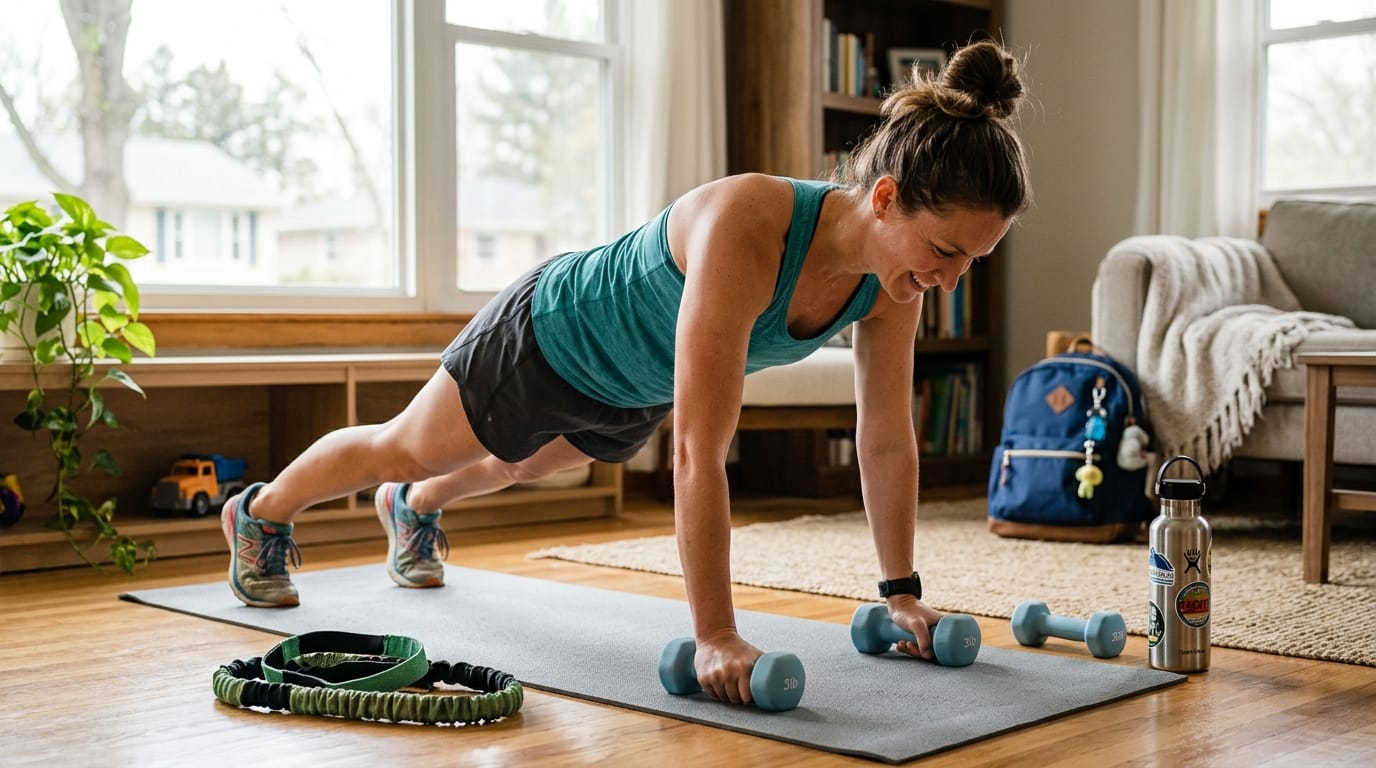
Strength training for mom runners is one of the smartest fitness moves you can make in 2026. Running is powerful, simple, and freeing, but it also places repeated stress on your feet, knees, hips, core, and pelvic floor. When you add motherhood into the mix, with broken sleep, busy schedules, lifting kids, errands, work, and household responsibilities, your body needs more than miles. It needs strength that supports your real life.
The good news is that you do not need long gym sessions to get stronger. Many moms need workouts that fit into short pockets of time, not another complicated plan that creates pressure. A 20-minute strength session can help you build better running form, protect your joints, improve posture, and reduce the chance of burnout. The goal is not to train like a professional athlete. The goal is to become a stronger, more durable runner while still honoring your season of motherhood.
In 2026, more women are choosing practical strength, shorter workouts, and smarter recovery over extreme fitness routines. That shift is perfect for running moms. Instead of chasing perfection, strength training for mom runners helps you build a routine that supports energy, consistency, and confidence.
Why Strength Training Matters for Mom Runners
Many moms start running because it feels accessible. You can lace up, step outside, and move. You do not need a full gym, complicated equipment, or a perfect schedule. But running alone does not train every muscle your body needs to stay strong. Over time, weak glutes, tight hips, undertrained core muscles, and poor single-leg stability can make running feel harder than it should.
Strength training helps fill those gaps. It trains the muscles that keep your stride stable, your posture tall, and your joints supported. Strong hips can help reduce excess stress on the knees. A stronger core can help you stay upright when you feel tired. Stronger calves, glutes, and hamstrings can improve push-off and control. For moms returning after pregnancy, strength work can also support a more careful comeback when paired with medical clearance and proper pacing.
This does not mean every mom runner needs heavy lifting right away. The best plan depends on your fitness level, postpartum stage, injury history, schedule, and available equipment. If you are newly postpartum, start with clearance from your healthcare provider and rebuild gradually. You can also read our postpartum running tips for moms before adding harder workouts.
The 2026 Fitness Shift: Shorter, Smarter, Stronger
Fitness trends are moving away from the “all or nothing” mindset. Moms do not need to choose between a full hour at the gym or doing nothing. Shorter workouts can still matter when they are focused and consistent. A 15- to 20-minute strength session can target the muscles runners rely on most, especially when repeated two or three times a week.
This approach works because busy moms often need realistic wins. You may not have a quiet hour, but you might have 20 minutes before the kids wake up, during nap time, after school drop-off, or while dinner is in the oven. That small window can become enough when your plan is clear.
Think Support, Not Punishment
Strength training should not feel like punishment for missing a run, eating a snack, or having a stressful day. It should feel like support. Your strength sessions are there to help your body handle the demands of running and motherhood. When you treat strength work as care, not correction, it becomes easier to stay consistent.
What Muscles Mom Runners Should Train First
The most helpful strength plan for running moms should focus on glutes, hips, hamstrings, calves, core, back, and pelvic floor awareness. These areas support your stride, posture, balance, and recovery. Running is basically a series of single-leg landings, so single-leg strength matters more than many moms realize.
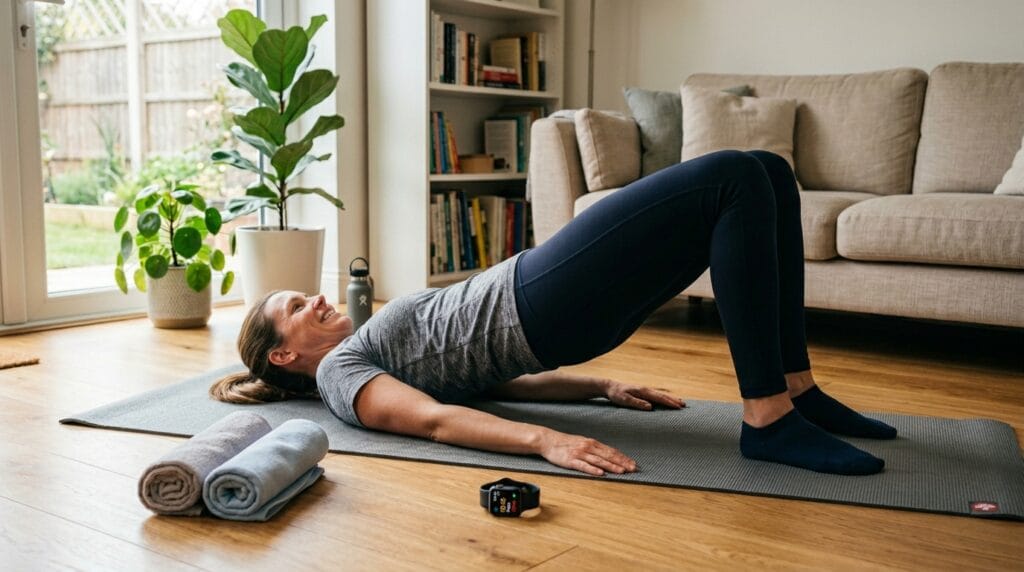
Start with basic moves. Squats help build lower-body control. Glute bridges strengthen the backside of the body. Step-ups train one-leg stability. Calf raises support the ankles and lower legs. Dead bugs and bird dogs train core control without forcing your body into aggressive crunches. Rows or band pull-aparts help balance posture, especially for moms who spend time holding babies, carrying bags, nursing, driving, or working at a computer.
If you have leaking, heaviness, pelvic pressure, sharp pain, or unusual symptoms during running or strength work, do not ignore it. Scale back and consider speaking with a pelvic health physical therapist or healthcare provider. Strength training can be helpful, but it should match your body’s current needs.
Start With Bodyweight Before Adding Load
You do not need to begin with heavy weights. Bodyweight exercises can teach control first. Once your movement feels stable, add a resistance band, dumbbells, kettlebell, or backpack. The goal is steady progress, not rushing. For busy moms, safe consistency beats random intensity every time.
A Simple 20-Minute Strength Workout for Mom Runners
This workout is designed for moms who want a practical starting point. Warm up for three minutes with marching, arm circles, gentle lunges, hip circles, and ankle rolls. Then complete the exercises below in a circuit. Move with control and rest when needed.
Start with 10 bodyweight squats. Follow with 10 glute bridges. Then do eight step-ups per side using a stable step or low bench. Continue with 10 calf raises, 8 bird dogs per side, and 10 resistance band rows or towel rows. Repeat the circuit two or three times depending on your available time and energy.
This may look simple, but simple works. The exercises target major areas runners need without requiring a gym. You can finish the workout in about 20 minutes and still feel like you did something useful for your running. If you are just beginning your running journey, pair this with our guide on how to start running as a busy mom.
Use the Talk-Test for Effort
Your strength workout should feel challenging but controlled. You should be able to breathe steadily and maintain good form. If you are rushing, holding your breath, or losing control, slow down. Better form gives better results than faster reps.
How to Fit Strength Training Into a Mom Runner Schedule
 =
=
The hardest part is not knowing which exercises to do. The hardest part is making the routine fit into real family life. Moms often train around school mornings, feeding schedules, work, laundry, appointments, errands, and unpredictable kid needs. That is why your plan must stay flexible.
A simple weekly routine could include two runs, two 20-minute strength sessions, one family walk, and two flexible recovery days. If you already run more often, place strength work after an easy run or on a non-running day. Avoid doing a hard strength session right before your most important run of the week. Your legs need time to recover.
Morning workouts can be useful because the day has fewer chances to interrupt you. If mornings are your best option, read our morning running routines for moms for more ideas. If mornings are chaotic, choose another reliable pocket of time. Your routine does not need to look like anyone else’s.
Use technology wisely. A smartwatch or fitness app can help you track workouts, but do not let data create pressure. The point is to build a repeatable routine, not to turn every session into a performance review. If your body feels tired, modify the workout. If your child wakes up early, finish one circuit and count it as a win.
Protect Recovery Like It Is Training
Recovery is not laziness. It is the time when your body adapts. Moms often try to push through fatigue because they are used to taking care of everyone else first. But if you ignore sleep, hydration, nutrition, and rest, your running and strength work will eventually suffer. Use recovery days for walking, stretching, mobility, or nothing at all.
The CDC recommends adults get regular aerobic activity and muscle-strengthening activity each week. That does not mean you need to cram everything into a perfect schedule. It means your body benefits when you include both cardio and strength in a realistic way. For official guidance, visit the CDC Physical Activity Guidelines for Adults.
Strength training also supports your mental side of running. When your body feels stronger, running can feel less intimidating. You may feel more confident on hills, more stable during stroller runs, and more prepared for longer distances. You may also feel proud because you are building something that belongs to you, not just managing another family responsibility.
If you struggle with balance, remember that running and motherhood do not have to compete all the time. You can build a routine that respects both. For more support, read how to balance running, parenting, and self-care.
Strength training for mom runners is not about becoming perfect, lifting the heaviest weights, or adding one more pressure to your week. It is about helping your body handle the miles, the motherhood load, and the life you are already carrying. Start with 20 minutes. Keep the moves simple. Repeat them consistently. Build strength slowly. Over time, those small sessions can help you run stronger, recover better, and feel more confident every time you lace up.