

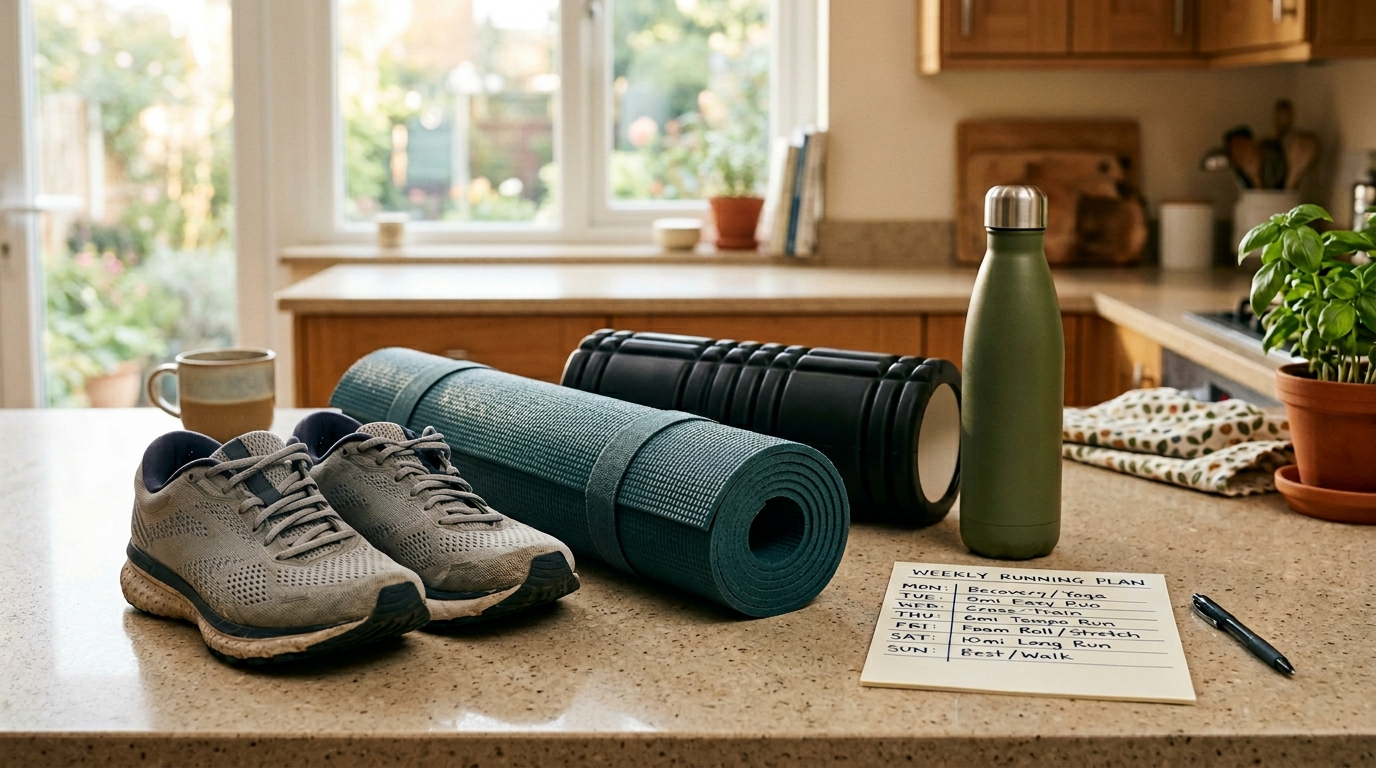
Strength training for running moms is one of the best ways to run stronger, feel more stable, and reduce the nagging aches that often show up when life gets busy. Many moms love running because it is simple: shoes on, step outside, move your body, and come back feeling clearer. But running alone does not always build the strength your hips, glutes, core, feet, and legs need to handle repeated impact.
The good news is that you do not need a gym membership or one-hour workouts. A smart 20-minute strength routine can support your running, protect your body, and fit into real mom life. Whether you run before school drop-off, during nap time, after work, or whenever you can squeeze it in, strength training can help you stay consistent without feeling broken down.
This guide is designed for busy moms who want realistic fitness, not another impossible routine. If you are just getting started, you may also enjoy How to Start Running as a Busy Mom. If mornings are your best window, pair this article with Morning Running Routines for Moms.
Why Strength Training for Running Moms Matters
Running is repetitive. Every step asks your body to absorb force, stabilize your joints, and push forward again. If your glutes, hips, core, calves, and feet are not strong enough to support that rhythm, your body may compensate. That can lead to tight hips, sore knees, cranky ankles, low back discomfort, shin pain, or general fatigue that makes running feel harder than it should.
Strength training for running moms helps fill the gaps. It gives your body the support system it needs to run with better control. Strong glutes help stabilize the hips. A stronger core helps posture and balance. Strong calves and feet support push-off and landing. Strong hamstrings and quads help with hills, speed changes, and everyday movement like carrying kids, groceries, laundry baskets, and backpacks.
How strength training helps prevent common running aches
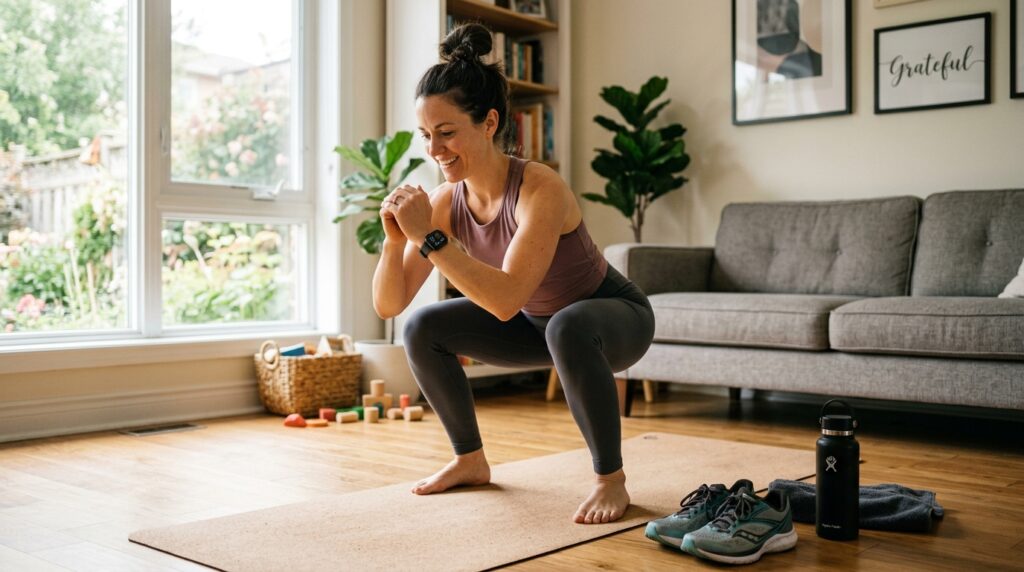
Many running aches are not caused by one dramatic moment. They build slowly. You increased mileage too quickly. Ran tired for several weeks. Skipped recovery because motherhood does not pause. Shoes are old, your sleep is short, or your stress is high. Strength training cannot fix every problem, but it gives your body a better foundation.
For running moms, the goal is not to lift the heaviest weight possible. The goal is to improve control, stability, and resilience. You want muscles that can support your stride when you are tired, climbing hills, pushing a stroller, or running after a night of interrupted sleep.
Strong glutes support your knees and hips
Your glutes are power muscles for running. When they are weak or underused, your knees and hips may take more stress. Exercises like glute bridges, step-ups, squats, lateral band walks, and single-leg deadlifts can help your body stay aligned while running. Even two short glute sessions per week can make your stride feel more stable over time.
A stronger core improves posture and control
Your core is not only about abs. It includes deep muscles that help stabilize your pelvis, ribs, spine, and hips. Running with a tired or weak core can make your posture collapse, especially near the end of a run. Planks, dead bugs, bird dogs, side planks, and slow mountain climbers can help you stay controlled without needing complicated equipment.
Why 20 minutes is enough for busy moms
A lot of moms skip strength training because they think it has to be long and intense. It does not. A focused 20-minute workout can be enough when you choose smart exercises and repeat them consistently. The secret is to focus on movements that support running: squats, hinges, lunges, bridges, calf raises, planks, carries, and single-leg balance.
This approach also protects your energy. Moms are not training in a vacuum. You may be managing work, meals, school schedules, appointments, bedtime, and emotional labor. A 20-minute strength session is realistic because it can fit before a shower, during a lunch break, while kids play nearby, or after a short run. If you struggle with overdoing it, read How to Balance Motherhood and Running Without Burning Out.
Consistency beats perfect workouts
You do not need perfect form videos, matching workout clothes, or a quiet house. You need a simple plan you can repeat. Two 20-minute sessions per week are better than one intense workout followed by three weeks of nothing. Start small, keep the movements controlled, and build from there.
A Simple 20-Minute Strength Plan for Running Moms
The best plan is the one you will actually do. For strength training for running moms, start with two sessions per week. Keep one day between hard running and harder strength work if possible. If you are a beginner, bodyweight is enough. If you are comfortable, add light dumbbells, a resistance band, or a kettlebell.
Before starting, warm up for three minutes. March in place, do gentle squats, hip circles, arm swings, and easy lunges. You should feel warm, not exhausted. Then move through the workout slowly and with control.
20-minute runner strength workout
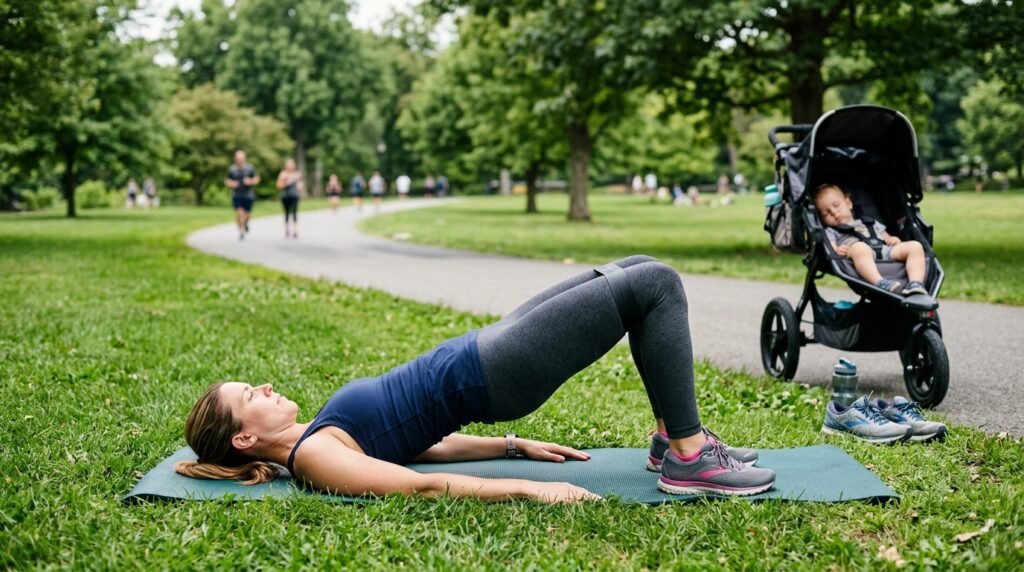
Try this simple routine two times per week. Do each exercise for 40 seconds, rest for 20 seconds, then move to the next. Complete two rounds.
Exercise 1: Squats. Keep your feet about hip-width apart, sit your hips back, and stand tall. Squats help build leg strength for hills, stairs, and stronger running form.
Exercise 2: Glute bridges. Lie on your back, knees bent, feet on the floor. Lift your hips by squeezing your glutes, then lower with control. This is excellent for moms who sit often or feel weak through the hips.
Exercise 3: Reverse lunges. Step one foot back, lower gently, and return to standing. Alternate sides. Lunges build single-leg strength, which matters because running is basically a series of single-leg movements.
Exercise 4: Dead bugs. Lie on your back, arms up, knees bent. Slowly lower opposite arm and leg while keeping your core steady. This trains control without stressing the back.
Exercise 5: Calf raises. Stand tall, lift your heels, pause, and lower slowly. Strong calves help with push-off and can support your lower legs during running.
Exercise 6: Side plank. Hold a modified side plank from the knees or a full side plank from the feet. This strengthens the side body, hips, and core stability.
How to schedule strength around running
A simple weekly plan could look like this: Monday easy run, Tuesday 20-minute strength, Wednesday rest or walk, Thursday run, Friday 20-minute strength, Saturday longer easy run, Sunday recovery. If your week is chaotic, move the sessions around. The exact day matters less than giving your body regular strength practice.
Good gear can also make training easier. Supportive shoes, a comfortable sports bra, breathable clothes, and simple home equipment can remove friction. For help choosing basics, visit Best Running Gear for Moms.
If you are postpartum, return slowly and get clearance from your healthcare provider before running or doing intense strength work. Pay attention to pelvic pressure, leaking, heaviness, pain, or symptoms that feel wrong. Start with breathing, walking, gentle core work, and pelvic floor-friendly movements. For more support, read Postpartum Running: Safe Tips for Moms Returning to Fitness.
The Centers for Disease Control and Prevention recommends adults include muscle-strengthening activity at least two days per week, along with regular aerobic activity. You can review the official guidance from the CDC physical activity recommendations for adults.
In the end, strength training for running moms is not about becoming a bodybuilder or adding another stressful item to your schedule. It is about giving your body the support it needs to keep running, keep moving, and keep feeling strong through busy seasons of motherhood. Start with 20 minutes. Repeat it twice a week. Celebrate small improvements. Stronger running is built one realistic session at a time.
When motivation dips, remember that every small workout still counts. Some days you may only manage one round, and that is okay. You are still showing up for your health, your strength, and your future runs. For extra encouragement, read Motivation to Run: How Moms Can Stay Inspired Every Step of the Way.
Disclaimer: This article is for general educational purposes only and is not medical advice. If you are pregnant, postpartum, injured, or managing a health condition, speak with a qualified healthcare provider before starting or changing your exercise routine.